


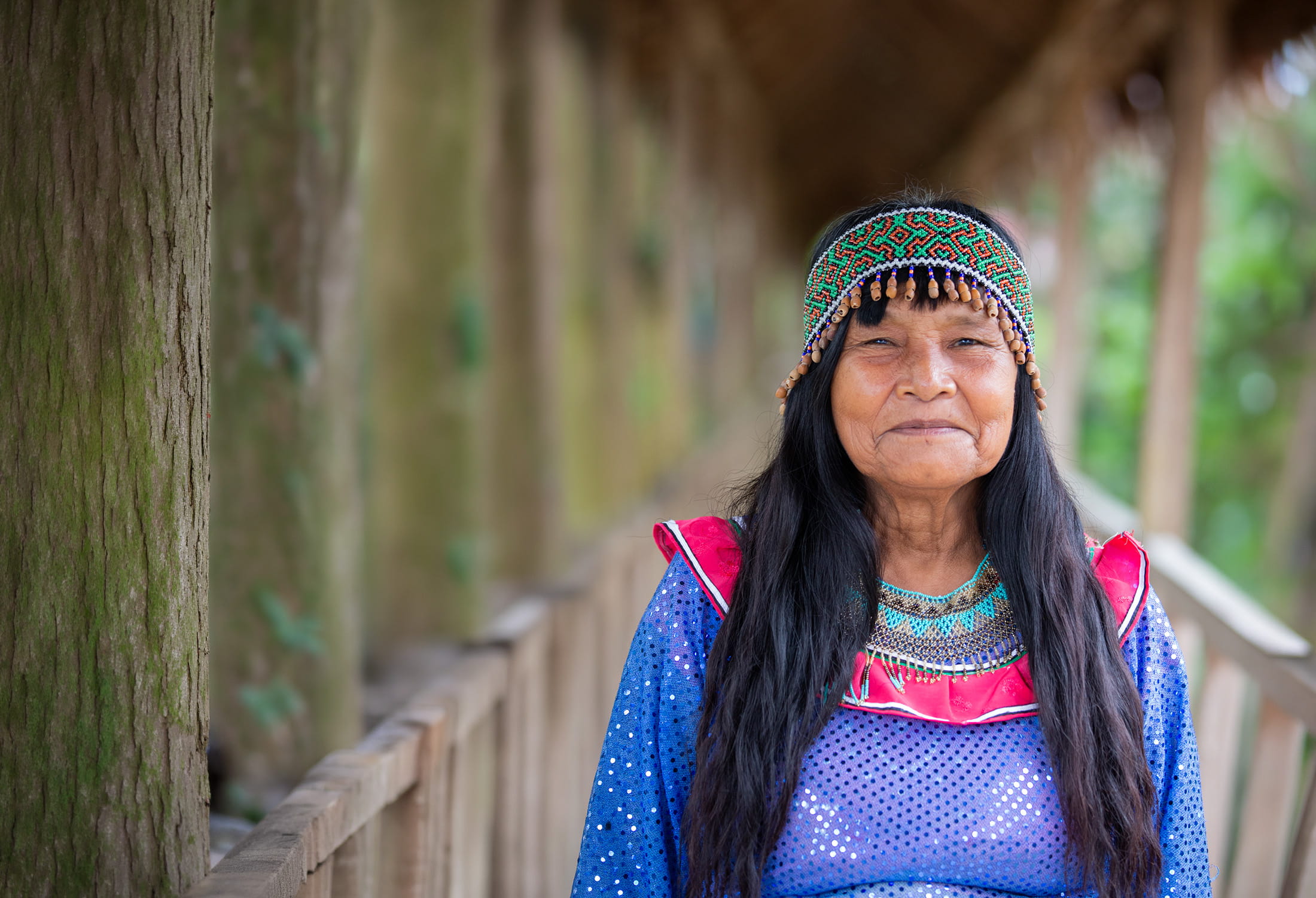

The search for authentic Shipibo shaman ayahuasca ceremonies in Peru leads thousands of seekers to the Amazon each year. Yet not all experiences honor the depth of this 3,000-year-old healing tradition. This guide reveals how to find ceremonies rooted in genuine lineage, safety, and transformative care.
%201.jpg)
Shipibo shaman ayahuasca ceremonies represent a living medical tradition passed down through countless generations in Peru's Amazon basin. Unlike recreational or loosely facilitated experiences, these ceremonies follow precise protocols developed over millennia—where the shaman serves as both healer and intermediary between the physical and spiritual worlds.
The ayahuasca brew itself combines the Banisteriopsis caapi vine with chacruna leaves (Psychotria viridis), but what distinguishes Shipibo ceremonies is the framework surrounding the medicine: the icaros (healing songs), the diagnostic abilities of the shaman, and the comprehensive worldview that treats illness as an imbalance requiring spiritual, emotional, and physical healing together.
The Shipibo-Conibo people have maintained one of the most intact ayahuasca healing lineages in the Amazon. For these communities, ayahuasca isn't alternative medicine—it's primary healthcare that addresses physical ailments, emotional trauma, and spiritual disconnection as interconnected aspects of wellbeing.
What makes Shipibo shamanism particularly significant is its systematic approach. Shipibo healers undergo decades of training through plant dietas—extended periods of isolation, fasting, and communion with specific teacher plants. This isn't symbolic; these dietas literally rewire the healer's perception, allowing them to diagnose illness through visions and channel healing through their icaros.
At Arkana, this lineage is embodied by Maestra Justina—a Meraya (the highest rank of Shipibo shaman) with over 45 years of experience—alongside Maestro Cesar (50+ years), and the next generation including Maestro Luis, who began his training at age 7 and was conducting ceremonies by age 10. This multi-generational family carries over 100 combined years of healing experience.
Authentic ceremonies begin weeks before you drink the medicine. The ayahuasca dieta involves eliminating certain foods (pork, alcohol, fermented foods, excessive salt and sugar), medications, and sexual activity. This isn't arbitrary restriction—it's energetic preparation that makes the body more receptive to the medicine and reduces potential interactions.
Proper preparation also includes setting clear intentions, beginning meditation or journaling practices, and completing thorough medical screening. Reputable centers will require detailed health histories and may ask you to taper certain medications under medical supervision weeks in advance.
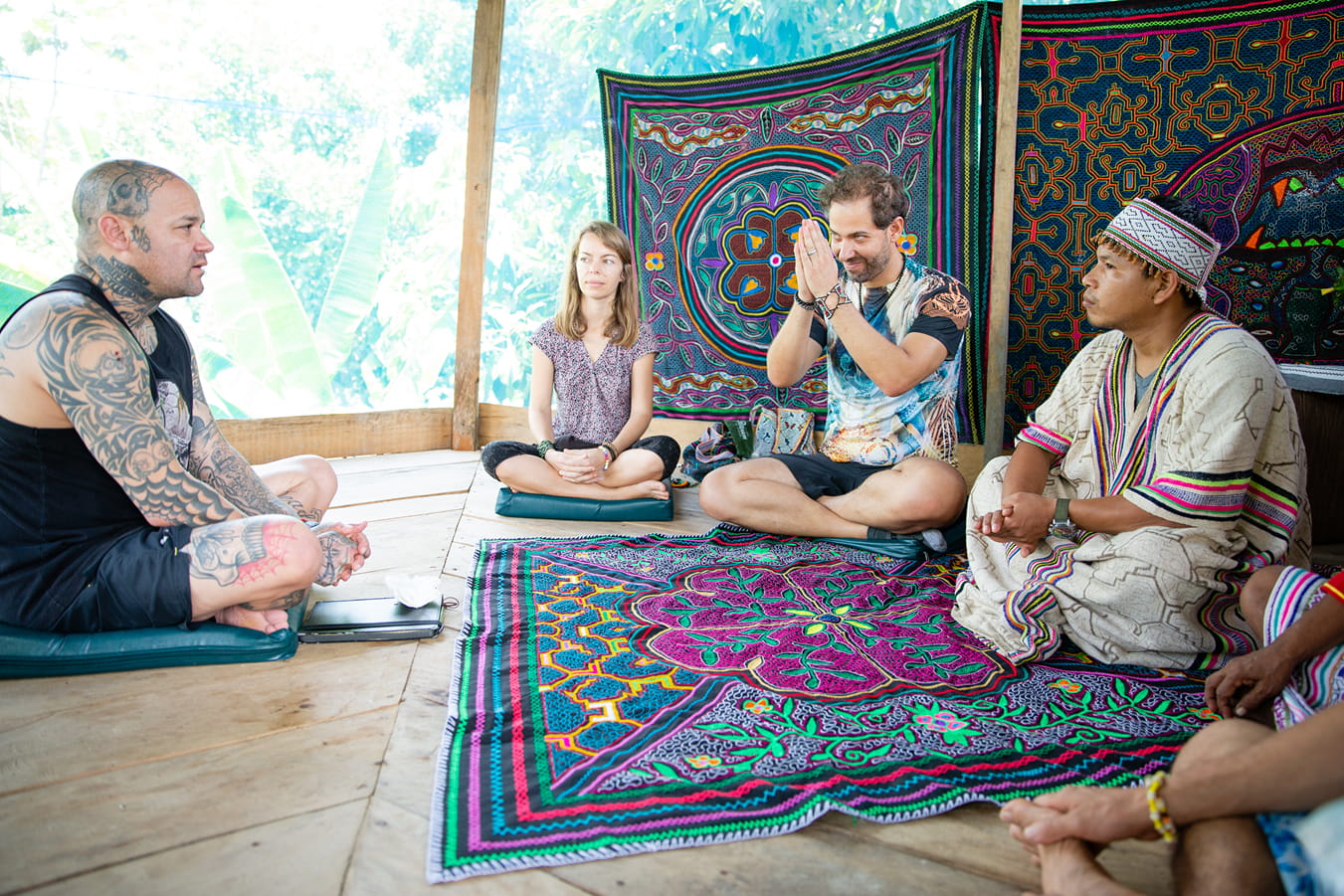
A traditional Shipibo ceremony typically begins at nightfall in a ceremonial space called a maloca. The shaman opens sacred space through prayer and tobacco smoke, then serves individually-calibrated doses of ayahuasca to each participant.
As the medicine takes effect, the shaman begins singing icaros—healing songs that are considered the primary therapeutic tool in Shipibo medicine. These aren't simply melodies; each icaro carries specific healing frequencies and intentions. A skilled shaman reads the energy of each participant and may sing personalized icaros to address individual needs.
Ceremonies typically last 4-6 hours, during which participants may experience visions, emotional releases, physical purging, and profound insights. Trained facilitators remain present throughout to assist anyone who needs physical or emotional support.
The ceremony itself is only the beginning. What distinguishes transformative experiences from temporary insights is integration—the deliberate process of applying ceremony insights to daily life. Quality centers provide group sharing circles between ceremonies, individual counseling, and ongoing support after you return home.
Arkana's 8P Method of Integration addresses eight dimensions: Purpose, People, Perception, Passion, Power, Presence, Peace, and Play—providing a structured framework for translating ceremonial breakthroughs into lasting behavioral change.
Research published in peer-reviewed journals has documented ayahuasca's therapeutic potential for depression, anxiety, PTSD, and addiction. A 2019 study in Scientific Reports involving over 7,500 participants found that ceremonial ayahuasca use was associated with lower problematic alcohol use and better mental health outcomes.
Beyond clinical benefits, participants frequently report reconnection with life purpose and meaning, healing of childhood and ancestral trauma, release of limiting beliefs and patterns, enhanced creativity and problem-solving abilities, deeper connection with nature and spirituality, and improved relationships and communication.
These outcomes depend heavily on the ceremonial container. Working with experienced Shipibo shamans who can properly diagnose and treat energetic imbalances—rather than simply serving medicine—significantly increases the depth and durability of healing.
The most critical factor in selecting a retreat is the shaman's experience and lineage. Authentic Shipibo healers can trace their training through specific teachers and name the plants they've dieted. Be wary of vague claims; a true Maestro or Maestra will speak openly about their decades of preparation.
Key questions to ask: How many years has the shaman been practicing? Who were their teachers? What plant dietas have they completed? Do they continue to diet and learn? Are they from a recognized healing lineage within Shipibo communities?
Comprehensive health and safety protocols are non-negotiable. Reputable centers require detailed medical questionnaires, phone consultations with health staff, and clear contraindication guidelines. People with bipolar disorder, schizophrenia, certain heart conditions, or those taking SSRIs and MAOIs cannot safely participate.
Additionally, look for: trained Western facilitators alongside indigenous healers, emergency medical protocols, proximity to hospitals for rare complications, and clear policies on participant-to-staff ratios.
The quality of support surrounding ceremonies matters as much as the ceremonies themselves. Smaller group sizes (typically 8-15 participants) allow for more personalized attention. Multiple facilitators should be present during ceremonies to assist anyone needing support while the shaman maintains focus on the healing work.
Evaluate the integration support offered both during and after the retreat. The best centers provide daily sharing circles, individual counseling, and ongoing support communities that continue long after you return home.
At Arkana, we offer authentic ayahuasca experiences at two sacred locations in Peru. Each carries its own medicine, its own teachings, its own perfect timing for different souls.


Peru

1–3 Week Programs • Year-Round

Peru
1–3 Week Programs • Year-Round
The Amazon jungle near Iquitos represents the ancestral homeland of Shipibo ayahuasca traditions. Here, the medicine grows wild, and the jungle itself becomes part of the healing container. Ceremonies conducted in this setting carry a particular potency—the sounds of the rainforest, the humidity, and the proximity to countless medicinal plants create an immersive experience.
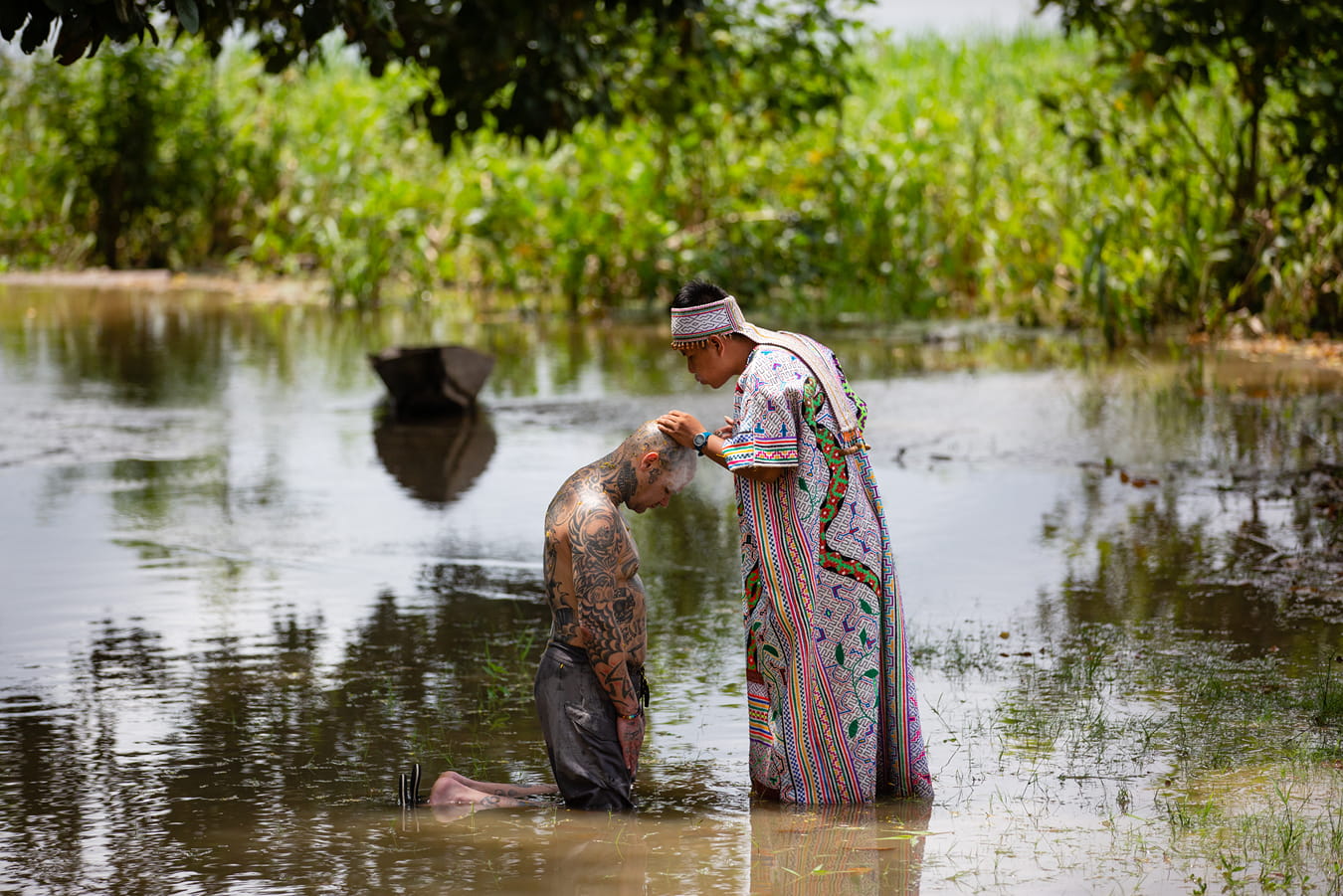
Arkana's Amazon center sits along the Ucayali River, accessible by boat from Iquitos. The remote location ensures minimal distraction while the surrounding jungle provides opportunities for plant baths, nature walks, and deeper communion with the forest that gives birth to this medicine.
The Sacred Valley near Cusco offers an alternative setting for those who prefer mountain energy or find jungle conditions challenging. While geographically removed from the Amazon, authentic Shipibo ceremonies can be conducted anywhere the lineage travels—what matters is the healer's training and intention, not the latitude.
At Arkana's Sacred Valley location, Maestra Ada—daughter of Maestra Justina—brings the family's authentic Shipibo lineage to the Andes. The mountain setting provides stunning natural beauty, easier accessibility from Cusco, cooler temperatures, and combination opportunities with other Andean sacred sites.
Research thoroughly: Read reviews and testimonials from multiple sources. Look for specific details about shaman experience, safety incidents (or lack thereof), and long-term outcomes.
Ask direct questions: Contact centers directly. Quality operations welcome questions about their shamans, safety protocols, and what differentiates their approach.
Plan adequate time: Avoid rushing. Book retreats of at least 7 days to allow proper preparation, multiple ceremonies, and initial integration before returning to regular life.
Commit to the dieta: Begin the ayahuasca diet at least 2 weeks before your retreat. This preparation dramatically impacts your experience.
Arrange integration support: Before you leave home, identify a therapist, integration circle, or support system for your return. The real work begins after ceremony.
What makes Shipibo shamans different from other ayahuasca practitioners?
Shipibo shamans undergo uniquely systematic training through decades of plant dietas—extended periods of isolation and communion with specific teacher plants. This process develops diagnostic abilities and healing songs (icaros) that distinguish their approach from less structured practices. The healers at Arkana represent this unbroken lineage, with Maestra Justina holding the rare Meraya designation—the highest rank in Shipibo shamanism.
How long should an ayahuasca retreat be for first-timers?
First-time participants should plan for at least 7 days, allowing for proper arrival acclimation, 3-4 ceremonies, and initial integration. Longer retreats (10-14 days) provide deeper work and more thorough integration before returning home. Review retreat options and pricing to find a duration that matches your intentions.
Is ayahuasca legal in Peru?
Yes. In 2008, Peru's government declared ayahuasca a National Cultural Heritage, recognizing its central role in indigenous healing traditions. Ceremonial use is fully legal and protected. This legal framework, combined with the presence of authentic indigenous lineages, makes Peru the premier destination for this work.
What should I look for in ayahuasca retreat reviews?
Look beyond star ratings to specific details: mentions of individual shamans by name, descriptions of safety protocols, accounts of how staff handled difficult experiences, and—critically—long-term outcomes reported months after the retreat. Genuine testimonials describe both the challenges and breakthroughs of authentic work.
Finding authentic Shipibo shaman ayahuasca ceremonies in Peru requires research, discernment, and willingness to prioritize quality over convenience. The markers of genuine healing spaces are clear: verified lineage, comprehensive safety protocols, experienced support staff, and robust integration programs.
At Arkana International, authentic Shipibo lineage isn't a marketing claim—it's the foundation of everything we do. With over 100 combined years of healing experience across a multi-generational family of Shipibo Maestros and Maestras, we offer the rare combination of ancestral wisdom and modern safety standards that makes profound transformation possible.
Whether you're called to the immersive depths of the Amazon jungle or the mountain sanctuary of the Sacred Valley, your journey toward healing deserves the care, expertise, and integrity that only genuine Shipibo tradition can provide.
How do I know if a shaman is authentically Shipibo?
Authentic Shipibo shamans can name their teachers, describe specific plant dietas they've completed (often spanning decades), and are typically known within Shipibo communities. Arkana's shamans come from a recognized healing lineage—Maestra Justina's family has practiced for generations in the Ucayali River region.
What medical conditions prevent participation?
Contraindications include bipolar disorder, schizophrenia, severe heart conditions, and current use of SSRIs, MAOIs, or certain other medications. Comprehensive medical screening is essential—reputable centers will require detailed health histories before accepting participants.
How much do authentic Shipibo ayahuasca retreats cost?
Quality retreats in Peru typically range from $2,500-$6,000 for a week, with prices reflecting shaman experience, safety protocols, accommodations, and integration support. Arkana's pricing includes all ceremonies, meals, accommodations, and integration support with no hidden fees.
Should I choose Amazon or Sacred Valley for my first retreat?
Both offer authentic Shipibo ceremonies. The Amazon provides full immersion in ayahuasca's homeland with jungle energy and remote isolation. The Sacred Valley offers easier accessibility, mountain serenity, and cooler temperatures. Choose based on which environment calls to you.
What happens after the retreat ends?
The real work begins at home. Integration involves applying ceremony insights to daily life through continued dieta, journaling, therapy, and community support. Arkana provides ongoing integration resources including our 8P Method framework, community groups, and facilitator access to support lasting transformation.
Ready to begin your healing journey? Contact Arkana to speak with our team about which retreat is right for you, or book your retreat directly.


