


Bufo, sometimes called Sapo, is a sacred medicine drawn from the venom of the Sonoran Desert toad, containing the compound 5-MeO-DMT. It is not taken as a drink the way ayahuasca is. Instead, the dried secretion is vaporized and inhaled, and its effects arrive within seconds rather than unfolding over hours.
A Bufo ceremony is brief, but it is not simple. Knowing what actually happens before, during, and after is one of the most steadying things you can do to prepare. This guide walks through the experience honestly and in order: how Arkana's team prepares you, what the inhalation and the minutes that follow tend to feel like, and what the hours and days afterward can look like. For the full picture of what Bufo is and how it compares to other medicines, start with our complete guide to Bufo.

Preparation for Bufo begins well before the day of ceremony, and most of the real safety work happens here, quietly, in the screening room rather than in the ceremony itself.
Every guest completes a medical intake overseen by Arkana's Medical Director, Dr. Arturo J. Sáenz Quintanilla, MD. This review identifies medications and health conditions that make Bufo unsafe, most importantly SSRIs, MAOIs, and cardiovascular concerns, and confirms that any required taper has been completed under the supervision of a guest's own physician before travel. Guests are also asked to keep to a lighter diet in the days before ceremony, reducing heavy, fatty, or processed foods, alcohol, and stimulants. This supports a calmer body going into the experience.
On the day itself, preparation is emotional as much as physical. Facilitators walk you through what to expect, invite you to set an intention, and answer any last questions before you enter the ceremony space. Nothing about this moment is rushed. The pace itself is part of the medicine.
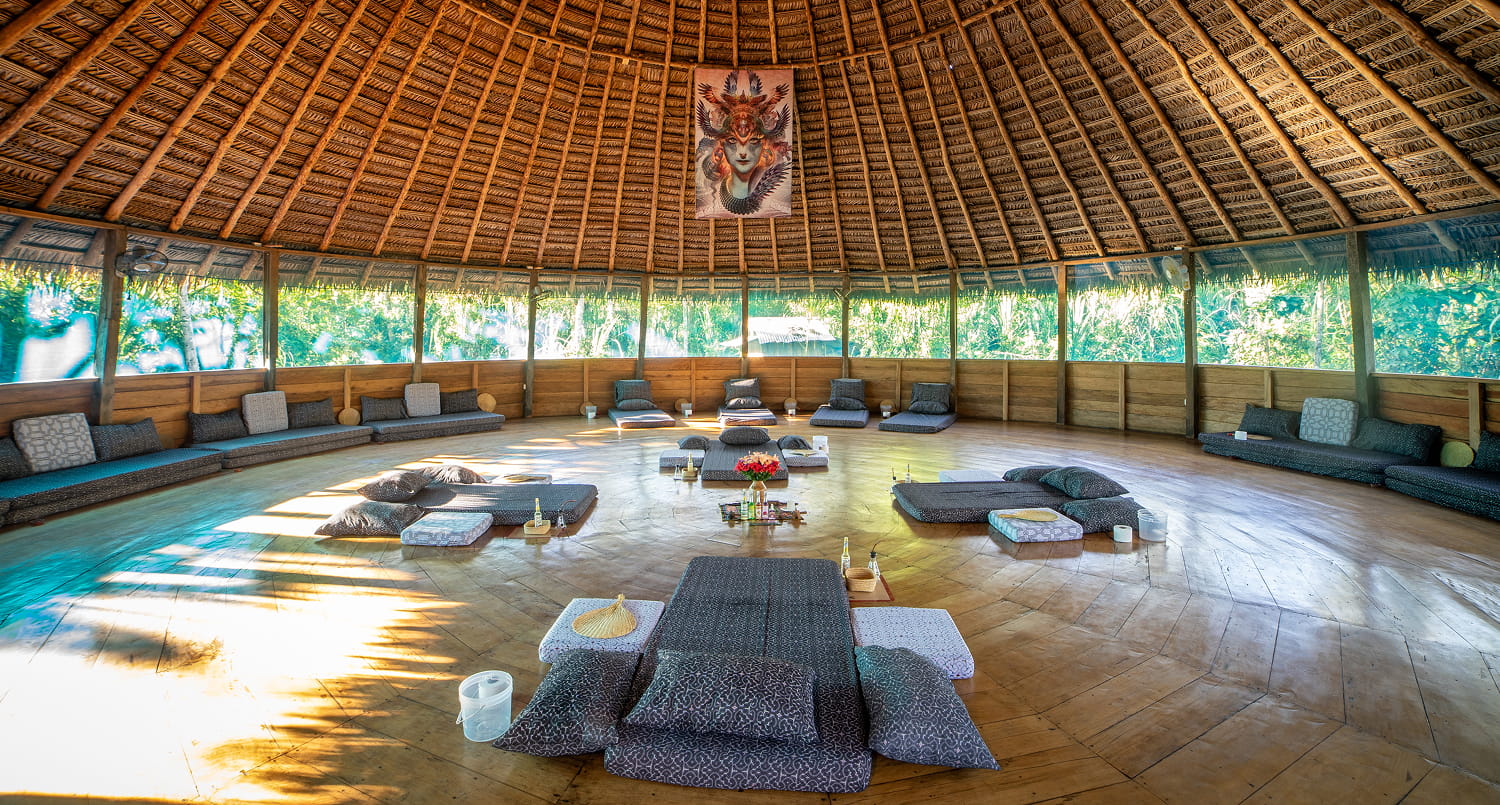
A Bufo ceremony is structured very differently from an ayahuasca ceremony, which is typically held with a full group through the night. Bufo is always received individually. At some locations, that means a fully private ceremony. In the Amazon, it more often means a small group gathers together, with each person receiving the medicine one at a time while the others hold the space around them.
Two to three facilitators stay with you personally throughout your journey, whatever the setting. The space is calm, quiet, and softly lit. Sound bowls and other gentle healing modalities are sometimes woven in, and the healing team shapes what is offered around the person in front of them rather than following a fixed script.
The ceremonial form we follow comes from Mexico, where the Bufo ceremony as it is practiced today took shape. We hold that form with respect for the Sonoran Desert the medicine comes from, and for the Comcáac (Seri) people, who know this toad as Otac. We also want to be straightforward about its history. What exists today is a living, contemporary practice rather than an ancient inheritance, and we would rather honor it honestly than claim more for it than the record supports.
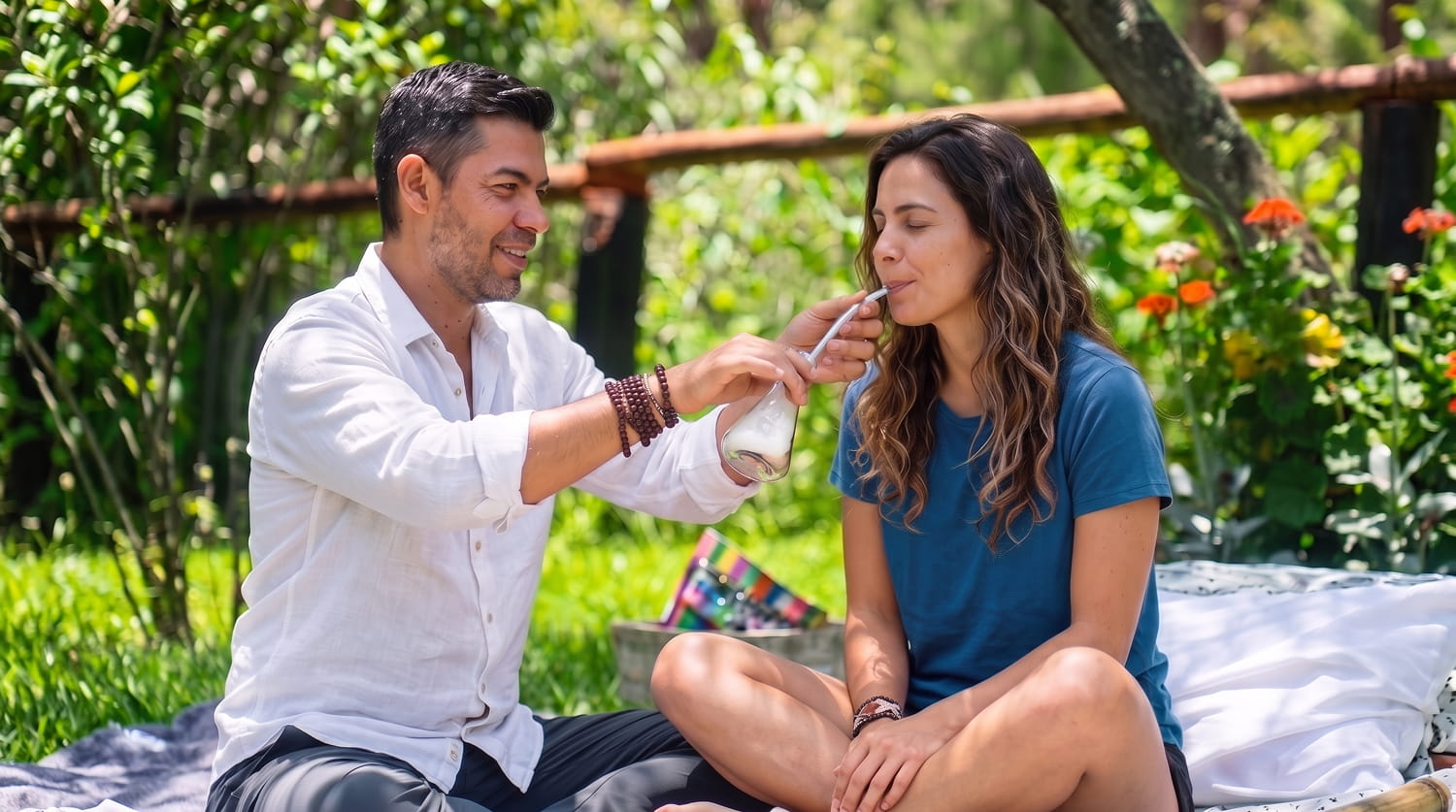
You receive the medicine seated upright and cross-legged. The dried secretion is gently heated and the vapor is inhaled through a pipe, in one or two long breaths guided by your facilitator, who will ask you to hold the inhalation briefly before releasing it.
There is no ramp-up. Within seconds, the effects begin to arrive. As they do, your facilitators gently lower you backward onto a prepared bed of pillows and blankets, so that you are lying comfortably and fully supported before the peak takes hold. They remain at your side, within arm's reach, for the entire journey.
This is the most intense part of the experience, and also the part people find hardest to put into words afterward. Many describe a rapid dissolving of the sense of being a separate self, replaced by a feeling of vast, boundless unity, light, or love. Physical sensations can include a rush of energy, warmth, or a brief feeling of the body itself falling away. Facilitators stay close throughout, offering a steady hand or voice as an anchor back to the room whenever it is needed.
As the peak softens, awareness of the room gradually returns. Many guests describe this stretch as tender and quiet, sometimes tearful, sometimes laughing, often simply still. Facilitators give you space to come back at your own pace rather than rushing you to speak or move.
.png)
The honest answer to what Bufo feels like begins with what guests share rather than with what sets them apart. Across very different journeys, the same words keep returning: lightness, bliss, love, a warmth that many describe as the most complete embrace of their lives. Research points in the same direction, finding that the most consistent feature of a 5-MeO-DMT experience is a sense of unity, of the boundary between self and everything else softening or falling away. The details differ from one person to the next. That underlying sense of being held by something vast and kind rarely does.
For many, it arrives as a profound lightness, a sense of lifting away from the body entirely, as though weight and physical form had simply stopped applying. For others it comes as an overwhelming wave of bliss, love, or beauty so complete that afterward they cannot find language equal to it. For a great many guests it is some blend of the two.
Some guests have no imagery at all. The experience arrives as a kind of whiteness, or as a gap they cannot quite account for, and they return without a story to tell, carrying only a clear sense of being lighter than when they began. This is common with Bufo, and it is not a lesser experience. The absence of imagery takes nothing away from the depth of what happened, and these guests often describe the same warmth and relief as everyone else.
Less often, guests describe memory-like or visionary impressions, including some they interpret as glimpses of another lifetime. Bufo is generally far less visual than ayahuasca, so this is not the norm, but it does happen and it is not cause for concern when it does.
Fear can arise as well, most often right as the peak arrives and the sense of self begins to loosen. Your facilitators are trained for precisely this moment. None of these versions is more correct or more advanced than another. The medicine tends to give people what they are ready to receive, and your experience does not need to resemble anyone else's to be complete.
The medicine is finished within the hour, but the process of integrating it is not, and Arkana treats the hours and days that follow as part of the ceremony itself.
Many guests find that a single Bufo ceremony delivers a complete and profound experience on its own. Others, particularly those working with a specific pattern or fear over time, choose to sit with the medicine more than once across a retreat or across return visits. There is no correct number. Arkana's facilitators and healing team help each guest sense what feels appropriate for them, rather than defaulting to more as automatically better.
If you are considering a Bufo ceremony, the most useful next step is usually a conversation rather than more research. You are welcome to schedule a discovery call with our team, or explore Bufo ceremonies at any of our retreat centers: the Amazon and Sacred Valley in Peru, and Valle de Bravo and the Yucatán in Mexico. For the fuller picture of what Bufo is, how it compares to ayahuasca, and how we approach safety, our complete Bufo guide is the place to start.
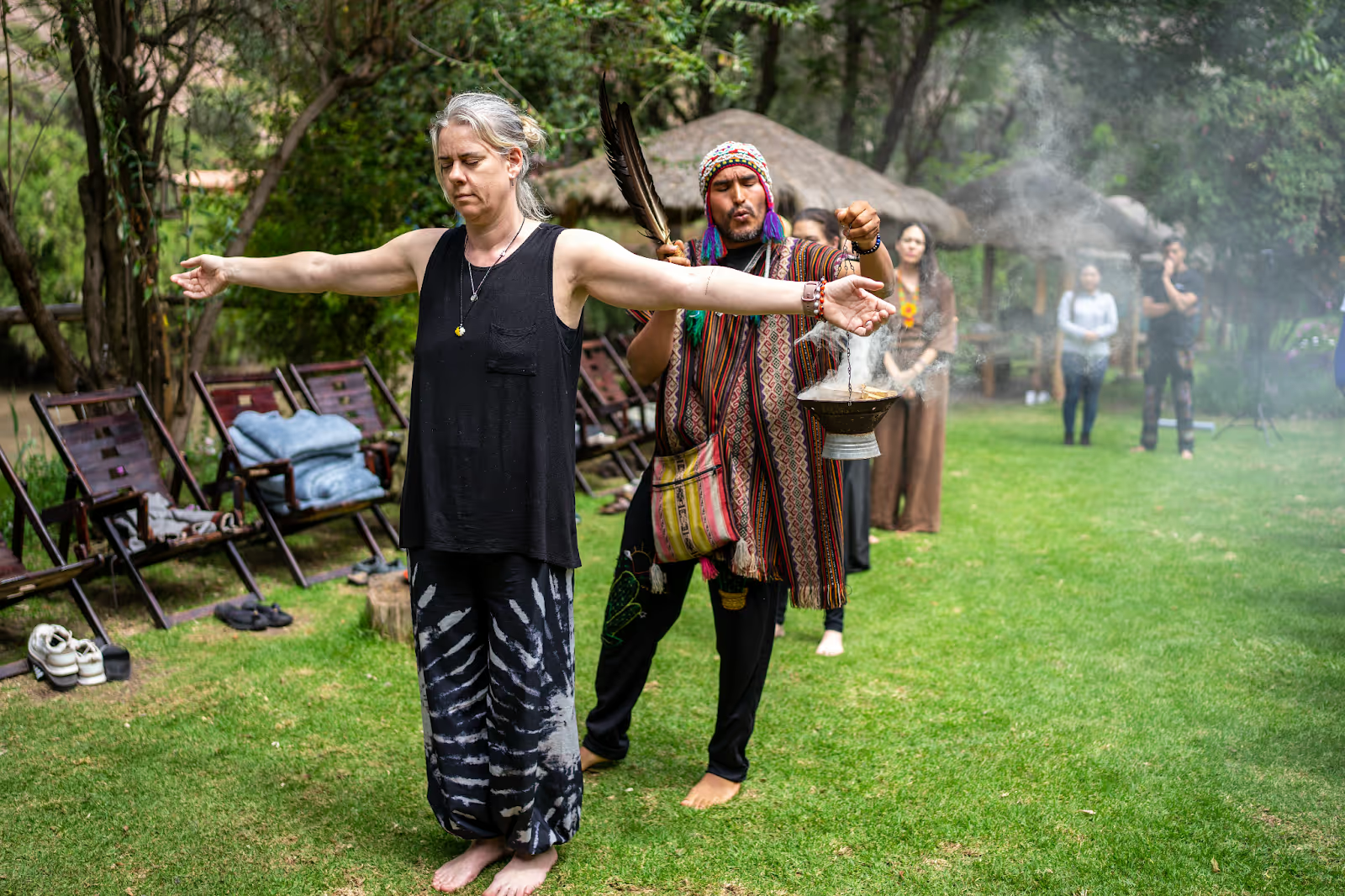
At Arkana Spiritual Center, we hold a safe, grounded, and sacred space for you to experience Bufo with the care it deserves.
If you have questions or want guidance before your retreat, our experienced team is here to walk beside you, from your first conversation through your integration and beyond.


%201.avif)