


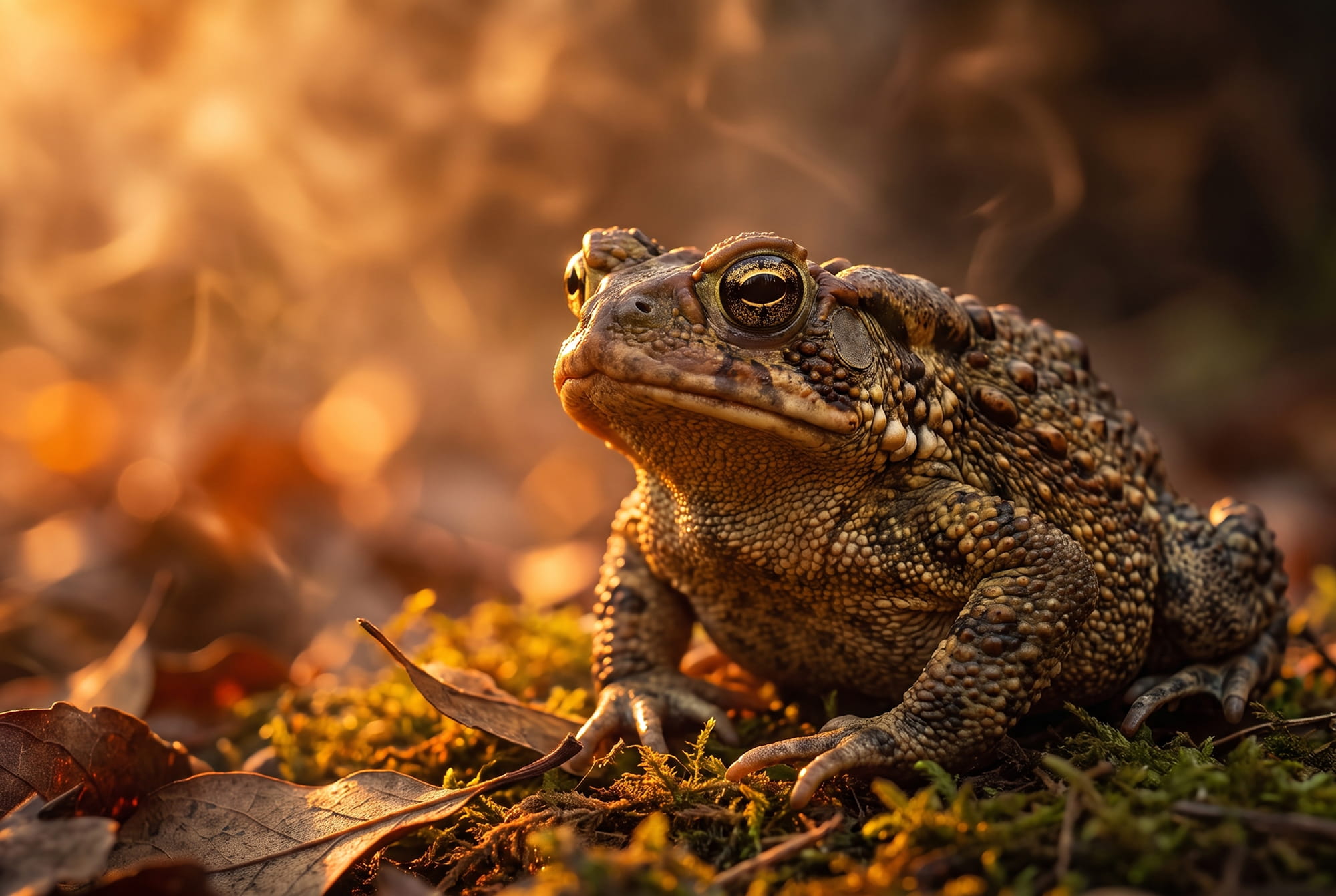

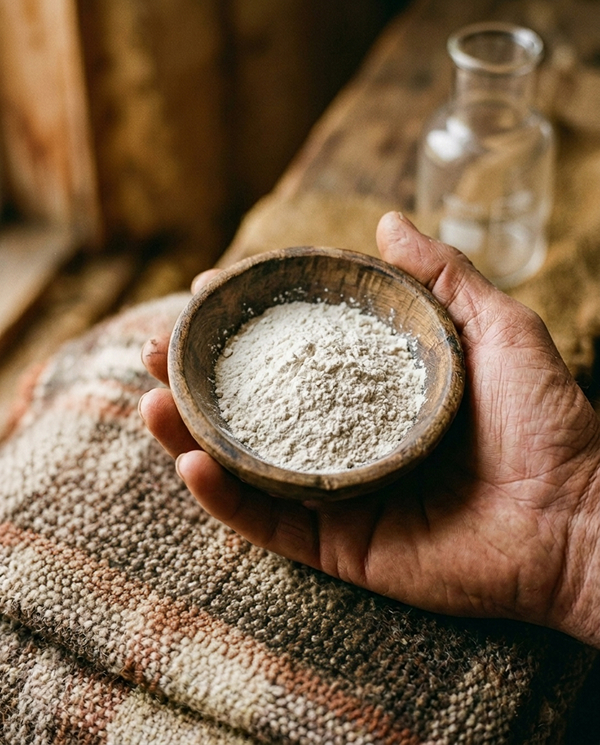


Bufo, also known as Sapo or the God Molecule, is a sacred medicine derived from the venom of the Sonoran Desert toad (Bufo alvarius). Its active compound, 5-MeO-DMT, is one of the most powerful naturally occurring psychedelics known. A Bufo experience is short but profound, often described as ego dissolution and a sense of union with all of existence.
If you have found your way to this page, you are likely somewhere between curiosity and caution. That is a healthy place to begin. Bufo is one of the most talked-about sacred medicines of the moment, and also one of the most misunderstood. Our aim here is to give you a clear, honest, and grounded picture: what Bufo actually is, what a ceremony feels like, how it differs from ayahuasca, where it stands legally, and how to approach it safely. We work with this medicine at Arkana, and we hold it with deep respect. That respect is exactly why we believe the most caring thing we can offer you is accurate information.
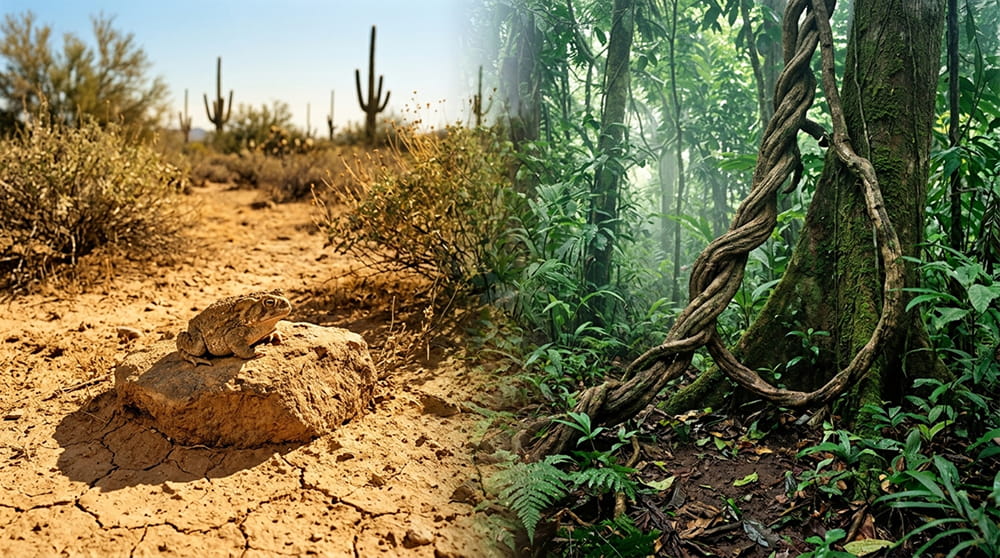
Bufo refers to the Sonoran Desert toad, Bufo alvarius, now formally reclassified by scientists as Incilius alvarius. It is also called the Colorado River toad. Native to the Sonoran Desert region spanning northern Mexico and the southwestern United States, this toad produces a milky secretion in the glands along its neck and back as a natural defense. When that secretion is carefully dried and gently vaporized, it becomes the medicine that seekers around the world now call Bufo.
You will hear it called by several names, and this is often where confusion begins:
All of these point to the same medicine and the same active compound: 5-MeO-DMT. What makes this toad remarkable is that it is the only animal currently known to naturally produce 5-MeO-DMT in significant concentrations. The molecule also appears in certain Amazonian plants and traditional snuffs, but no other creature on earth carries it the way this desert toad does.
At Arkana, we honor Bufo as part of our wider family of sacred medicines, alongside ayahuasca, San Pedro, and Peyote. Each teacher works on a different layer of healing, and Bufo occupies a distinct place among them: fast, direct, and deeply humbling.
5-MeO-DMT (5-methoxy-N,N-dimethyltryptamine) is the primary psychoactive compound in Bufo, and understanding it helps explain why the medicine is spoken about with such reverence. It belongs to the tryptamine family and acts primarily on the brain's serotonin system, with a particularly strong affinity for the 5-HT1A receptor. Researchers believe this is part of why the experience arrives so quickly and can feel so completely ego-dissolving.
Bufo is not swallowed. Because 5-MeO-DMT is not active when taken orally, the medicine is inhaled as a vapor. The effects arrive within seconds, reach a profound peak, and then soften, with the core experience typically lasting anywhere from ten minutes to about an hour. This brevity is part of what defines it. Where other medicines unfold slowly over many hours, Bufo tends to arrive like a wave: sudden, total, and then gently receding.
Because names travel and blur, a few distinctions are worth making so you can research with confidence:
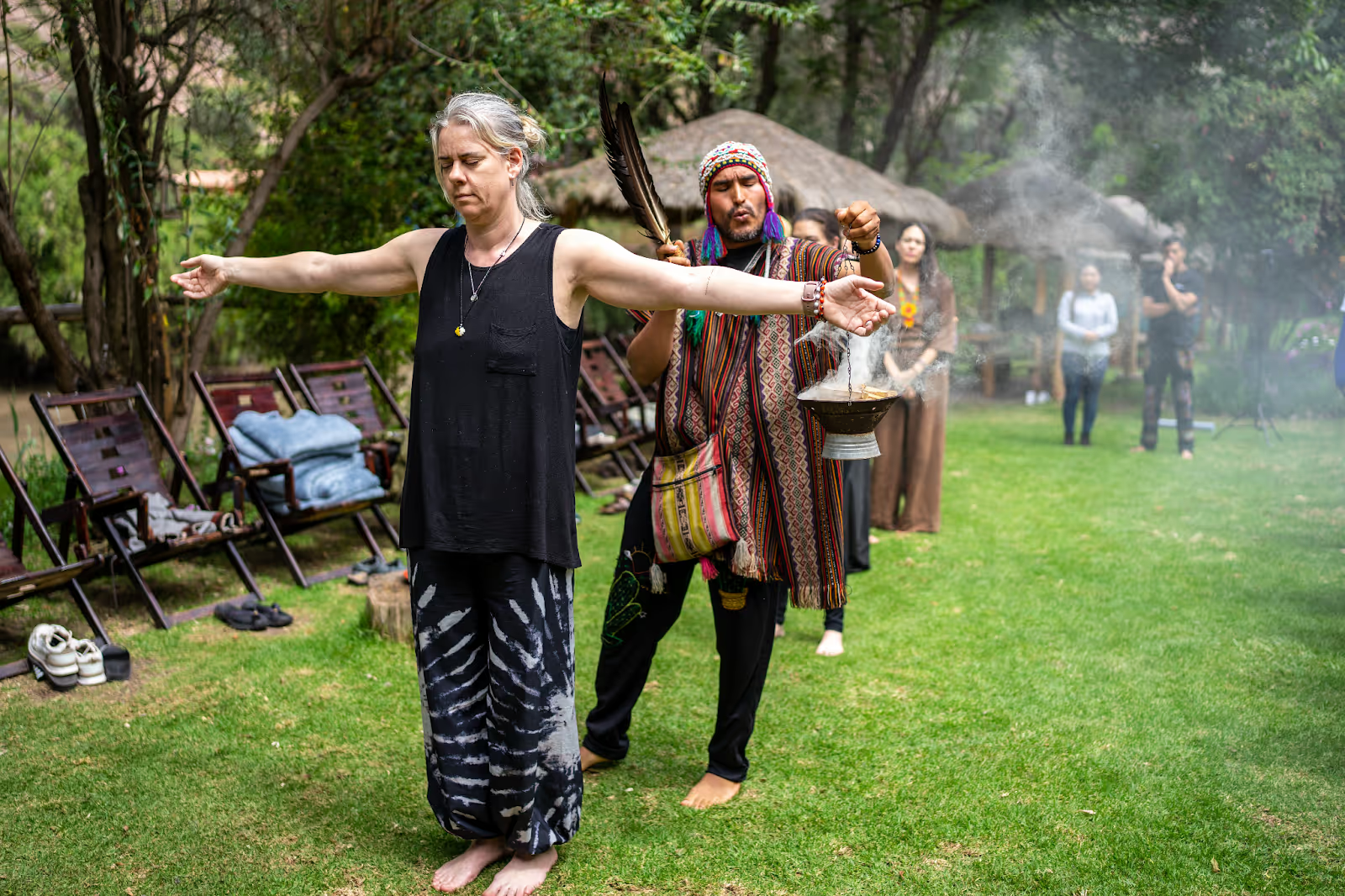
A Bufo ceremony is intimate and precise. Rather than a long night in the maloca, it centers on a single, carefully guided inhalation, held in a calm and sacred space with a facilitator beside you at every moment.
Once the vapor is received, the transition is almost immediate. Many people describe the sense of self quietly falling away, followed by an experience that language struggles to hold: infinite light, boundless love, a feeling of returning to source. In many traditions, this state of pure, non-dual awareness echoes what mystics have long pointed toward, from the Hindu experience of Samadhi to the Buddhist idea of Nirvana. Guests often speak of it afterward as a remembering rather than a discovery, as if touching something that was always there. many guests describe the sensation of Bufo as pure happiness or bliss, where others will explain it as the "universe's orgasm".
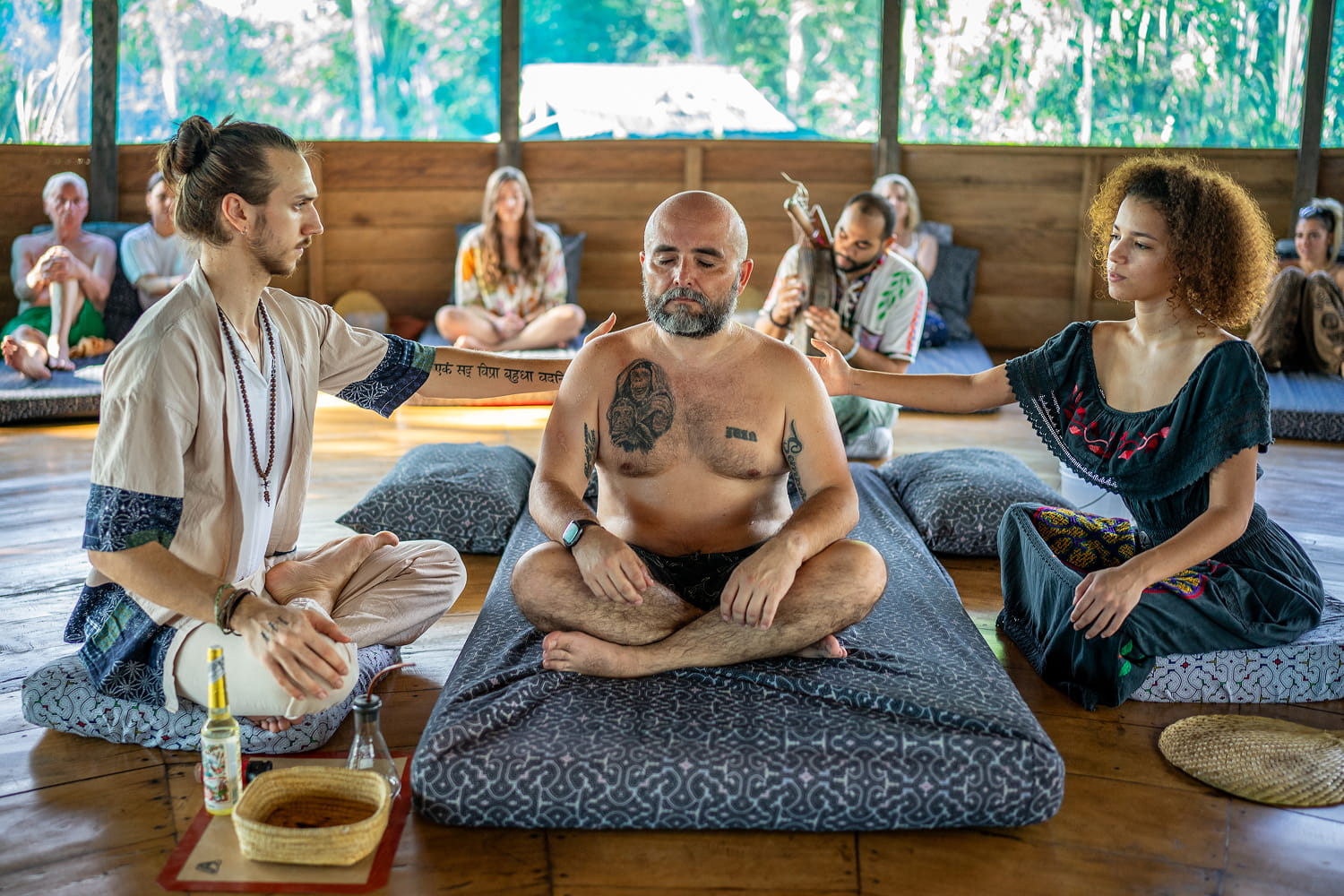
The physical experience is brief, but the reverberations are not. As the medicine recedes, there is usually a period of stillness, integration, and quiet reflection. What surfaces in those ten to sixty minutes can take weeks or months to fully understand, which is why the support that surrounds the ceremony matters as much as the ceremony itself.
For a moment-by-moment walk through preparation, the ceremony itself, and aftercare, see our guide to what to expect in a Bufo ceremony. And if you would like to witness it through someone else's eyes, our Bufo documentary follows a first-time guest through the full arc of the experience at Arkana.
Many people arrive at Bufo after hearing about, or sitting with, ayahuasca. They are both sacred allies, and neither is stronger or better; they simply work differently. Ayahuasca tends to be visionary and narrative, unfolding over four to six hours and often surfacing specific memories and life themes. Bufo is inhaled rather than swallowed, arrives within seconds, and tends to bypass the story entirely, delivering a direct, ego-dissolving encounter measured in minutes rather than hours. The traditions differ too: ayahuasca carries a generations-deep Amazonian lineage, while Bufo's ceremonial use is a more modern practice.
We compare the two medicines in depth, including the molecules, the experience, the tradition, and how to choose between them, in our full guide, Bufo vs. Ayahuasca.
Research on 5-MeO-DMT is younger and thinner than the decades of ayahuasca studies, and we think it is more honest to say so plainly than to overstate what is known.
The most cited data comes from a Johns Hopkins survey published in 2019, in which 362 people who had used 5-MeO-DMT in naturalistic, ceremonial group settings were asked to reflect on their experience. Among those who had been diagnosed with depression or anxiety, roughly 79 to 80 percent reported improvement, an effect researchers linked to the intensity of the mystical experience and its personal meaning to the participant. This is self-reported survey data looking back at past experiences, not a controlled clinical trial, and it should be read with that distinction in mind.
On the safety side, the 2024 systematic review in Frontiers in Psychiatry that informs our safety section below found a favorable short-term safety and tolerability profile for 5-MeO-DMT across the clinical trials examined, with effects that were generally mild and resolved on their own.
One property of 5-MeO-DMT that researchers highlight often is its brevity. Where a single ayahuasca ceremony runs four to six hours, a 5-MeO-DMT session is measured in minutes, which some researchers believe may make it easier to study and, eventually, to integrate into structured therapeutic settings. That research is still in its early stages, and we look forward to watching it develop alongside the tradition itself.
Bufo has become a subject of serious conversation in the wider plant medicine world, and rightly so. Because 5-MeO-DMT is so potent and fast-acting, the setting in which it is offered matters more than almost any other factor. This is the most important thing to understand before you sit with it.
In carefully screened, medically supervised settings, clinical research describes a favorable short-term safety profile for 5-MeO-DMT, with adverse effects that are typically mild and self-limiting. The concerns that have surfaced publicly in recent years are almost always connected to the opposite: unscreened participants, untrained facilitators, uncertain dosing, and the absence of any medical presence. The medicine is not the risk. The lack of preparation and oversight is.
This is where we believe Arkana offers something meaningful. Every guest is guided through a thorough intake and medical screening before a Bufo ceremony is ever considered. That screening is overseen by our Medical Director, Dr. Arturo J. Sáenz Quintanilla, MD, a board-certified neurosurgeon with more than thirty years of clinical experience. Certain conditions and medications, which we cover below, can make Bufo unsafe, and identifying them in advance is not a formality. It is the foundation of a responsible ceremony. During the experience itself, trained facilitators and medical support remain present and attentive from the first breath through the return.
Alongside the research, there is Arkana's own track record. Across more than a decade of sacred medicine work, and within the same physician-led framework described here, we have held Bufo ceremonies without a serious safety incident among guests who complete our screening and follow the guidance our facilitators provide. We share this not as a promise about any single journey, which always rests on honest screening and individual health, but as a reflection of what careful, consistent protocol makes possible.
You can read more about how we approach every ceremony on our health and safety page. Safety here is not a marketing line. It is the quiet infrastructure that makes genuine surrender possible.
Bufo can be a profound healing medicine, but it is not for everyone, and honoring Bufo's heritage and ensuring the ceremonies are conducted safely is important
Bufo may be a meaningful path for you if you feel called toward direct spiritual experience, if you are working with a fear of death or a sense of separation, or if you are seeking release from deeply held emotional patterns and are ready for an experience that is brief yet all-encompassing. Many guests come to Bufo after other forms of inner work, drawn to its clarity and its capacity to dissolve the boundaries of the self.
Bufo is not appropriate for everyone, and this is where screening becomes essential. Certain antidepressants, particularly SSRIs and MAOIs, can interact dangerously with 5-MeO-DMT. Heart conditions and specific cardiovascular concerns require careful evaluation, as do certain psychiatric diagnoses. None of this is meant to discourage you. It is meant to protect you. When our healing team determines that Bufo is not the right medicine for someone, that is not the end of the journey. It is simply a redirection toward a path that can hold them more safely, whether that is another sacred medicine, breathwork, or a more gradual approach. Healing has many doorways, and part of our work is helping you find the one that is right for you.
The legal status of Bufo depends entirely on where you are, and it is worth understanding clearly before making any plans.
Because these laws continue to evolve, we always encourage guests to verify the current status directly and to make informed choices about travel and participation. If you are ever unsure, our team is glad to talk it through with you honestly.
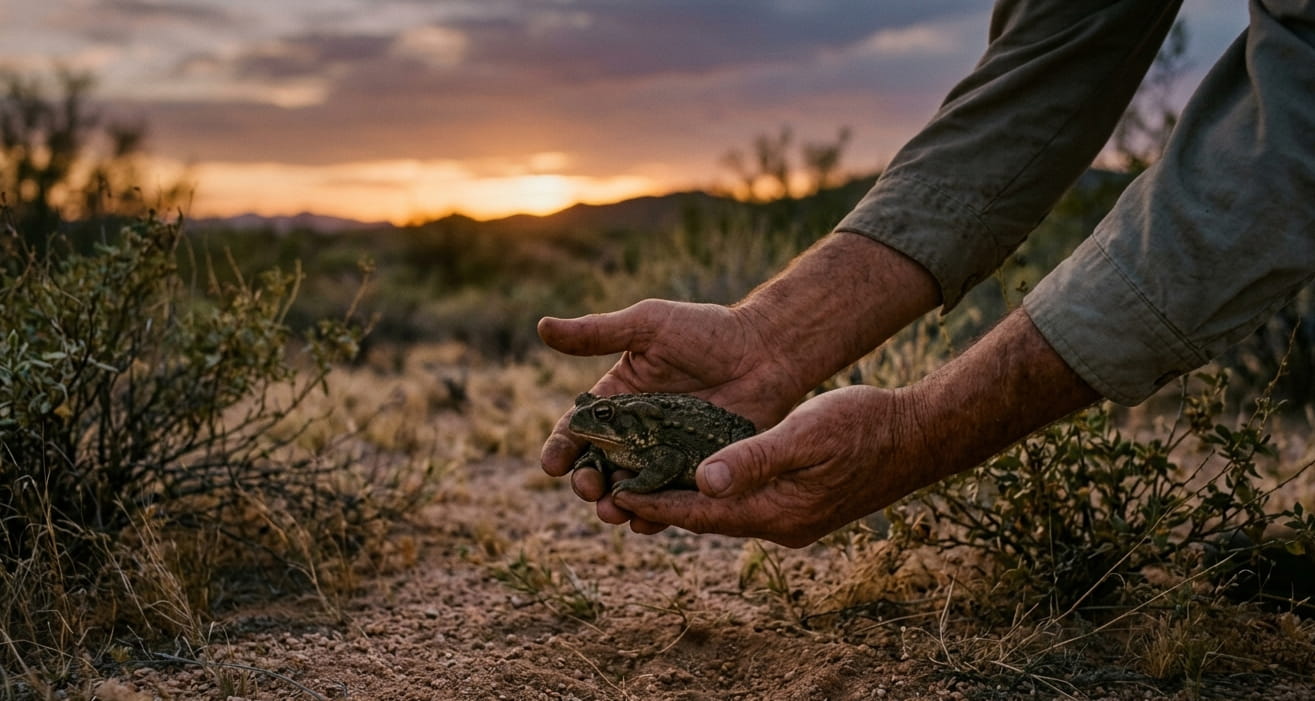
There is a conversation happening around Bufo that responsible centers cannot ignore, and we want to be transparent about it. As global interest in the medicine has grown, so has pressure on the Sonoran Desert toad itself. Conservationists and wildlife agencies have raised real concerns about poaching, over-harvesting, and stress placed on wild populations. A medicine that offers so much cannot be honored if the being that carries it is harmed in the process.
This is a question we take seriously. At Arkana, the medicine is gathered during the rainy season, when the toads naturally emerge, and the animal is returned to its habitat unharmed after collection. We view this not as a technicality but as an expression of the same reciprocity that guides all of our work with sacred medicines: a relationship of gratitude, not extraction. As the wider community continues to weigh questions of wild harvesting and ethically produced alternatives, we remain committed to sourcing that respects both the tradition and the living world it comes from.
If you feel drawn to Bufo, the environment you choose will shape everything. We offer Bufo ceremonies across our retreat centers, each with its own distinct energy: in Peru at our Sacred Valley and Amazon locations, and in Mexico at Valle de Bravo and the Yucatán.
What remains constant across all of them is the care that surrounds the medicine. Every Bufo experience at Arkana is built on physician-led medical screening, small and intimate groups, trained trauma-informed facilitators, and medical support present throughout. Just as importantly, the ceremony is never treated as the finish line. Through our 8P Method of Integration, guests are supported in carrying the insights of a Bufo journey into daily life, where the real transformation takes root. The experience itself may last only minutes, but the work of living it can unfold for years, and you are not meant to do that alone.
If you are wondering whether Bufo is right for you, the most grounded next step is simply a conversation. You are welcome to schedule a discovery call with our team to talk through your intentions, your history, and any questions you are holding. There is no pressure in that conversation, only clarity.
At Arkana Spiritual Center, we hold a safe, grounded, and sacred space for you to experience Bufo with the care it deserves.
If you have questions or want guidance before your retreat, our experienced team is here to walk beside you, from your first conversation through your integration and beyond.


%201.avif)