


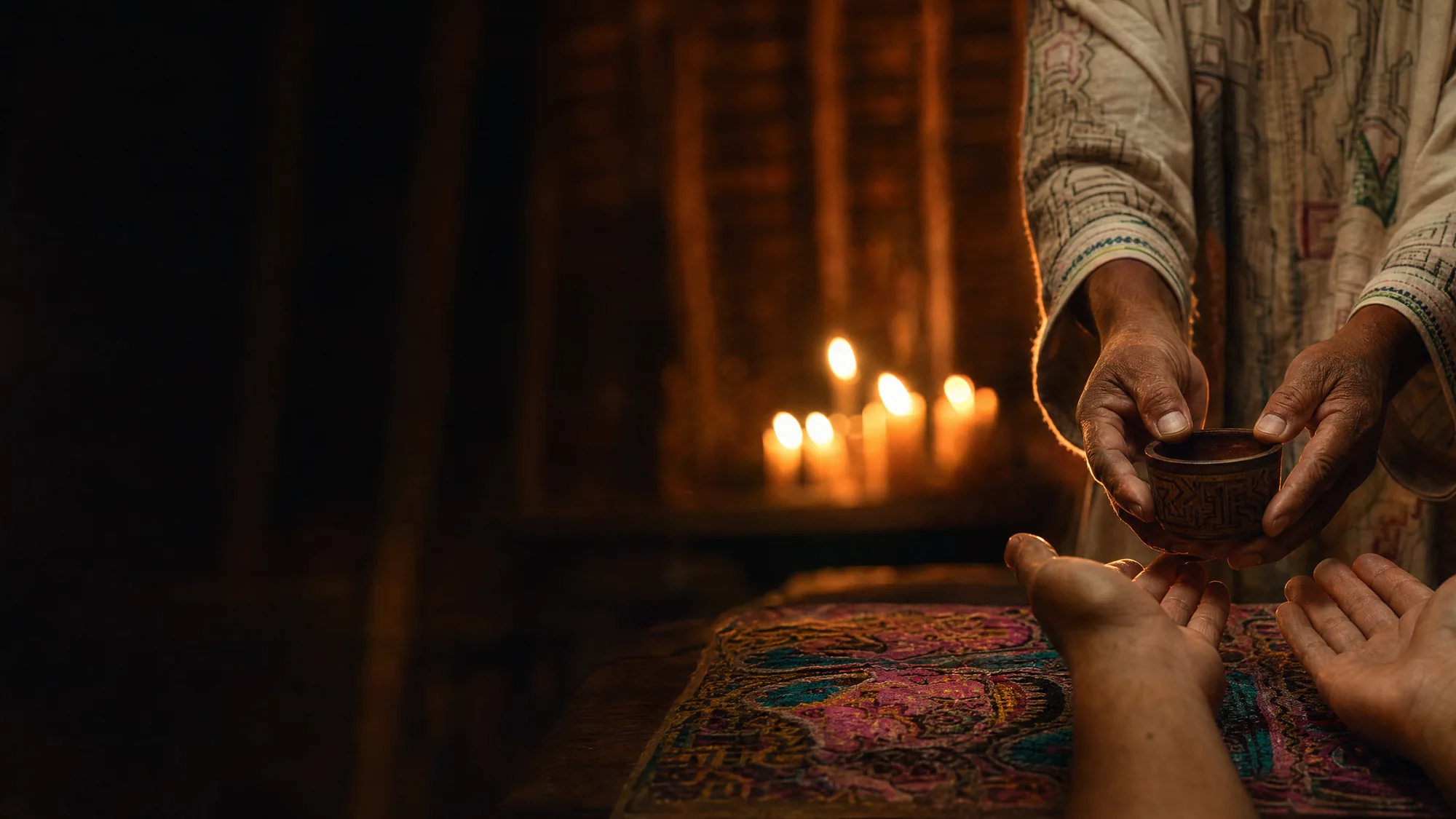

Ayahuasca carries real risks, and they can be managed with the right medical screening and the right setting. A 2024 systematic review of adverse events by White and colleagues found serious adverse effects to be rare in healthy populations, though every body responds differently. In practice, the risks that matter most, medication interactions, heart conditions and certain psychiatric histories, are exactly what careful screening is designed to identify before you ever sit in ceremony.
We wrote this guide to help you prepare as an informed guest, whichever center you choose. If you are new to the medicine itself, you may want to begin with the full ayahuasca guide.
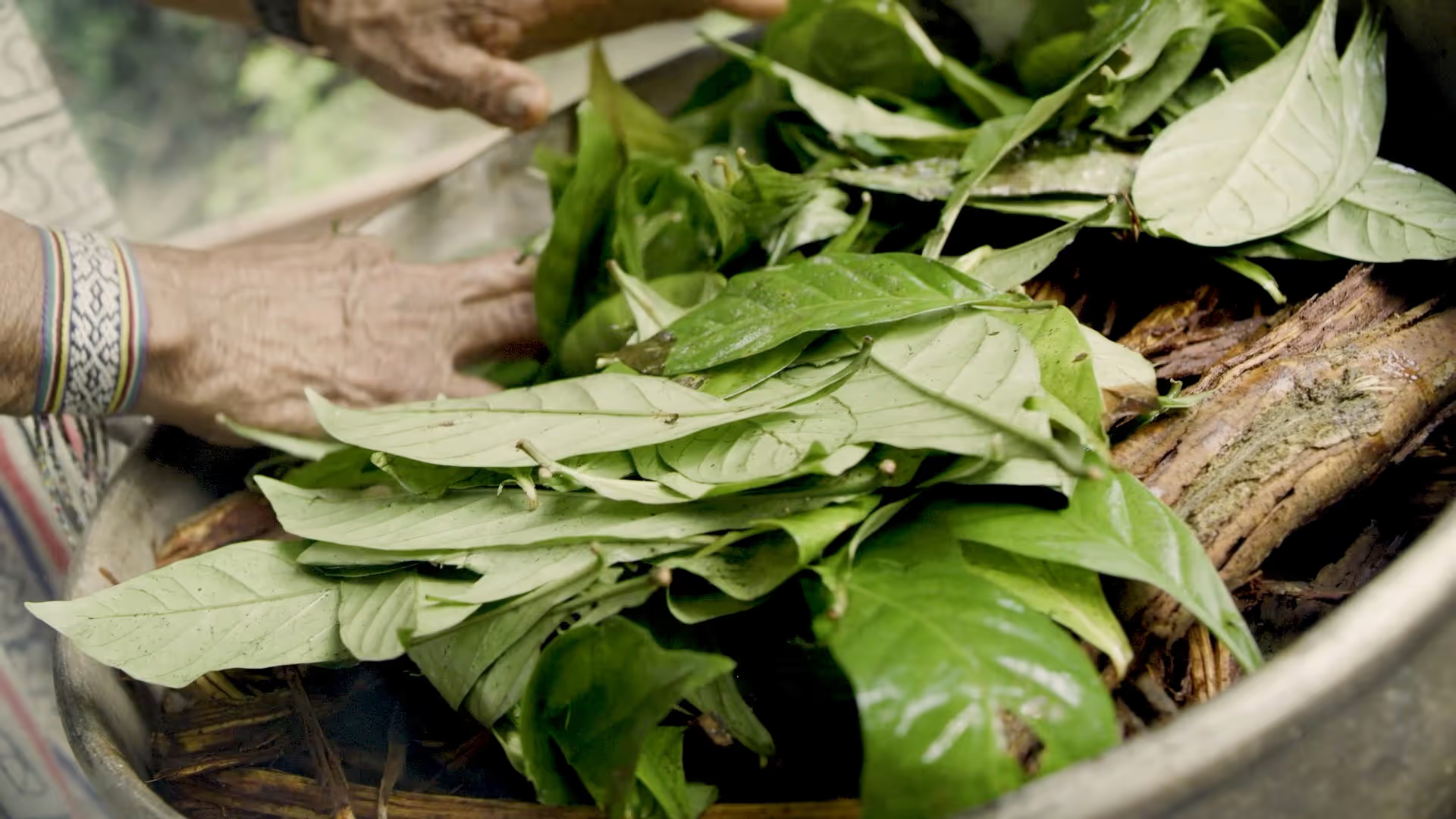
Ayahuasca is a brew of two Amazonian plants. The Banisteriopsis caapi vine contains harmine and harmaline, compounds that act as monoamine oxidase inhibitors (MAOIs). The leaves of Psychotria viridis, known locally as chacruna, contain DMT (dimethyltryptamine), the compound associated with the visionary experience.
Researchers studying the human pharmacology of ayahuasca, Riba and colleagues (2003), describe the brew as exactly this pairing of MAO-inhibiting compounds with DMT. In their study, diastolic blood pressure rose significantly at the higher dose, while systolic pressure and heart rate rose slightly and not significantly. Individual responses vary.
Monoamine oxidase is an enzyme your body uses to break down serotonin and related chemical messengers. While ayahuasca's MAOIs are active, that breakdown slows. Add a medication or supplement that also raises serotonin, and the combined effect can build further than the body can handle.
The result can be serotonin syndrome, which the clinical reference StatPearls describes as a potentially life-threatening condition caused by excess serotonergic activity, with drug interactions among its causes. How any one person reacts depends on the substances involved, their doses, and their own physiology. This is why the first question a responsible retreat asks is not how you feel about ceremony, but what you are taking.
For a small number of health conditions, the careful answer is not to drink ayahuasca at all, whatever the setting. The conditions that rule someone out at Arkana, and that we would expect any responsible center's screening to catch, are psychotic disorders such as schizophrenia, bipolar disorder, and severe heart disease.
For someone living with a psychotic disorder or bipolar disorder, ayahuasca is not advised. ICEERS, the International Center for Ethnobotanical Education, Research and Service, lists schizophrenia, psychosis and bipolar disorder, especially when active, among its psychiatric contraindications, and the 2024 review by White and colleagues links reported adverse cases to a personal or family history of psychosis or bipolar disorder. For that reason these diagnoses are treated as exclusions rather than as something to be managed in ceremony. These findings describe groups rather than any one person.
Ayahuasca can raise blood pressure for a period after drinking. ICEERS notes a mild increase in blood pressure and advises that people with serious cardiovascular conditions should not take ayahuasca. The 2024 review by White and colleagues lists hypertension among the less frequent effects. For a heart already under strain, even a modest rise matters, which is why your cardiovascular history is among the first things a good intake asks about. These findings describe groups of people, and your own response may differ.
If you live with another chronic condition, such as high blood pressure, epilepsy or diabetes, expect an individual medical conversation before any center accepts your booking; for high blood pressure, Arkana sometimes also asks for a medical release from your doctor. The same applies to any condition for which you take daily medication.
If there is any possibility that you are pregnant, Arkana strongly advises against taking part in ayahuasca ceremonies. If you are pregnant or think you might be, please talk with our team before planning a retreat.
The most serious interactions come from combining ayahuasca's MAOIs with anything else that raises serotonin or affects blood pressure. ICEERS, in its guidance on deciding whether to take ayahuasca, warns that certain antidepressants and other psychotropic medications may be contraindicated, that MAO inhibitors pose serious risks, and that St John's wort and Ginkgo biloba are contraindicated. For SSRIs specifically, Callaway and Grob (1998) describe how combining them with ayahuasca's MAO inhibition can produce serotonin syndrome. Interaction risk varies with the drug, the dose and the person. Treat the table below as the start of a conversation, not a verdict: in every row, any change to a medication is decided by your prescribing physician and the retreat medical team.
Please also tell the team about benzodiazepines and other central nervous system depressants, such as sleeping or anti-anxiety medication: we found no documented interaction with ayahuasca, but Arkana's own health and safety guidelines list them among the medications to avoid. ICEERS also advises avoiding alcohol, stimulants, opioids and other drugs before a session.
Please do not stop or reduce a prescribed medication on your own in order to attend a retreat. Whether and how to do it is a decision for your prescribing physician together with the retreat medical team. A careful center will want your full history before any timeframe is discussed.
What you eat matters too, which is why a dieta, a period of simple eating before and during a retreat, is part of traditional preparation. Our page on the ayahuasca dietary restrictions explains what that involves.
.avif)
The physical effects people most often notice are nausea and vomiting, known in ceremony as purging, and blood pressure can rise for a while. The 2024 systematic review by White and colleagues lists nausea and vomiting among the common effects of ayahuasca and DMT and hypertension among the less frequent ones, and found serious adverse effects rare in healthy populations. Those findings describe groups, and your own experience may differ.
In ceremony, vomiting is called purging. It is traditionally understood as a cleansing release, physical and emotional, rather than a sign that something has gone wrong, and for some people the purge comes as tears instead. It can be uncomfortable, and a good facilitator will stay close and help you through it.
StatPearls describes it as a potentially life-threatening condition caused by excess serotonergic activity, with drug interactions among its causes; with ayahuasca, the concern is its MAOIs combining with an interacting medication or supplement. StatPearls describes the classic picture as altered mental status, autonomic dysfunction, and neuromuscular excitation (StatPearls, NCBI Bookshelf). It needs emergency medical care, and its severity varies from person to person, which is why a center's emergency plan and distance to a hospital belong on your checklist.
Not all ayahuasca risks are physical. The medicine can bring buried memories, fear and grief to the surface, sometimes quickly. Many people describe that as part of their healing; for some, it can be destabilizing. The people for whom this matters most are those with a personal history of psychotic or bipolar disorders, covered above, and good screening also explores trauma, dissociation, and family mental health history.
ICEERS's safety profile distinguishes between use in controlled settings and uncontrolled use when it discusses adverse effects, a reminder that the setting and the people holding it are part of the risk picture. Every person's response is different, and no setting removes risk entirely.
If you carry significant trauma, tell your screening team so the people holding your ceremony know what may arise. Mention any dissociation, a sense of being detached from your body or surroundings, even from years ago. A thorough intake will also ask whether close relatives have been diagnosed with a psychotic or bipolar disorder.
At Arkana, we offer authentic ayahuasca experiences at two sacred locations in Peru. Each carries its own medicine, its own teachings, its own perfect timing for different souls.


Peru

1–3 Week Programs • Year-Round

Peru
1–3 Week Programs • Year-Round
Medical screening is how a center decides, before you arrive, whether ayahuasca is appropriate for you and what care you will need. These are the questions worth putting to any center, and a responsible one will answer each plainly and without pressure.
When you have found a center that answers these well, our guide on how to prepare for an ayahuasca retreat covers the weeks before you travel.
Where you drink ayahuasca affects your legal position. Legal status does not tell you how well a center screens, so the questions above apply in every country.
According to ICEERS's summary of Peru's legal position, ayahuasca is legal in Peru. Peru made a reservation under the 1971 Convention on Psychotropic Substances, and in 2008 the country recognized the traditional use of ayahuasca as part of its national cultural heritage. Arkana's Peru retreats are the Amazon retreat in Iquitos and the Sacred Valley retreat near Cusco.
ICEERS's summary of US law explains that DMT is a Schedule I controlled substance and that religious exemptions rest on narrow case law.
Legal status differs by country and can change. If you are considering Costa Rica or Ecuador, check the current position, for example in ICEERS's country legal summaries, and ask any center directly how it operates under local law.
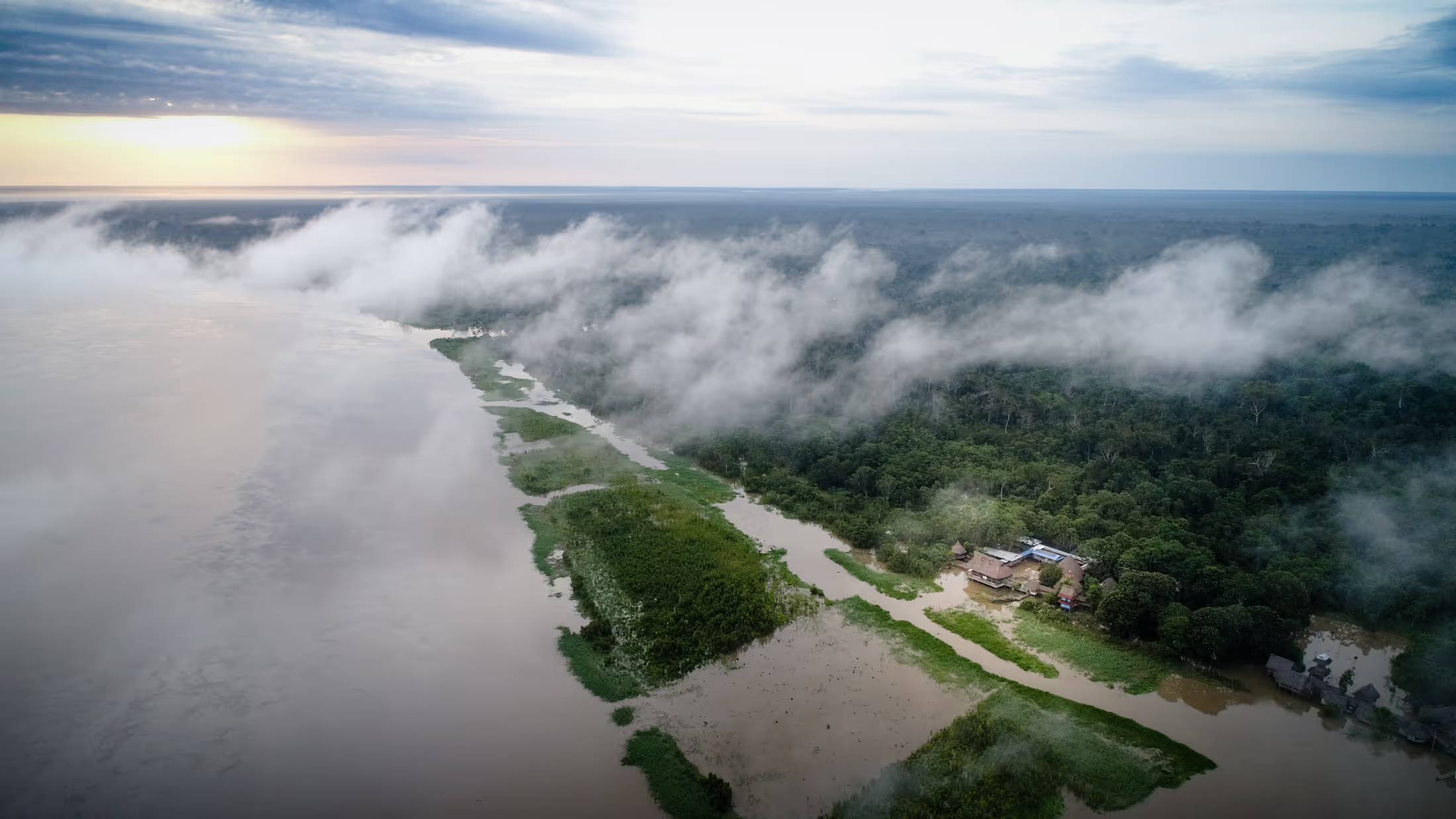
Everything in this guide applies to us as well. Here is how screening, ceremony and emergency planning work at Arkana.
Before you arrive, we hold an onboarding medical call to identify any health conditions that matter for ceremony. If you take any medication, our medical intake coordinator advises you on the specific safety protocol for each prescription. Guests with chronic conditions such as epilepsy, diabetes, heart conditions or high blood pressure consult with our team before booking, and eligibility is evaluated case by case, based on each person's circumstances and risk factors.
Guests diagnosed with the conditions listed earlier in this guide cannot take part in ceremony. If you are unsure whether something in your history affects your eligibility, please contact us before booking.
.avif)
Ceremonies are led by Shipibo maestros, traditional healers from the Shipibo people of the Peruvian Amazon, with Maestra Justina as our lead shaman. A team of trained facilitators works alongside the maestros throughout the ceremony; if you need help during the night, you turn on your flashlight and a facilitator comes to you. Multiple facilitators are on staff, and medical support is on the premises at every Arkana location.
Our Amazon center is near Nauta, outside Iquitos, and our Sacred Valley center is near Cusco. Every Arkana center is equipped with heart defibrillators, first aid kits and staff trained in CPR, and we maintain agreements with local doctors, clinics and ambulance services for rapid medical evacuation if it is ever needed. You are welcome to ask us about any of this before you book.
Arkana has held ceremonies in the Peruvian Amazon and the Sacred Valley since 2014. Our protocols today are the ones described on this page, from the medical call before you arrive to integration support after you return home. You can read Arkana's health and safety protocols in full, and see how that support continues through Arkana's integration method.
If you are still weighing whether ayahuasca is right for you, you are welcome to schedule a discovery call with our team to talk through your questions.
Medically reviewed by Dr. Arturo J. Sáenz Quintanilla, MD. This guide is general information and does not replace advice from your own physician.


